You can read about the history of abecedaria here.
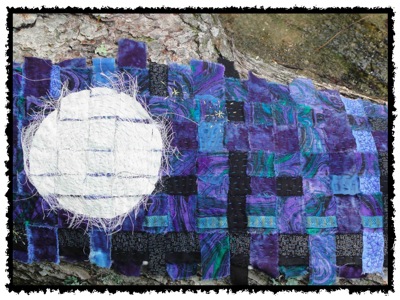
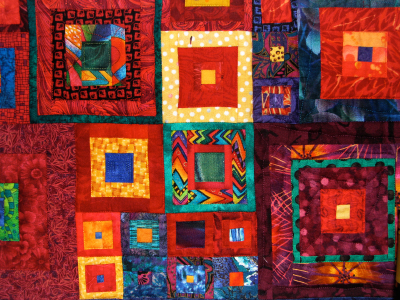
In my February workshop we’re exploring writing as quilting, and I’m thinking about my love for these smallest bits of meaning.
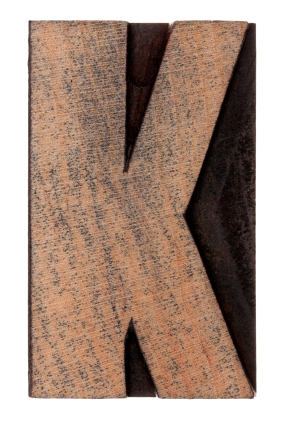
My blog posts this month will start with a letter for each day, the 29 days of February giving me plenty of leeway to make it through the Roman alphabet with three days to spare for distractions and glitches and letters that demand more time.
Tonight, under the heading of “You teach best what you most need to learn,” in my writers group, we focused on description.
The “students” lingered over details. They savored taste, scent, sight, and sound. They surprised and delighted all of us.
Meanwhile, I found myself in such a hurry to tell that I had to break my own no-editing rule to add description to scenes just before it was my turn to read aloud.
But I’m a writer–it’s supposed to be about the words, isn’t it?
Not so fast.
I’m learning that pictures feed my words.
I’ve been trying to walk outside, think in images, capture my own, and let them guide, or even tell, my stories.
If you want to learn to take better pictures–pictures that feed you and your writing–check out this course by Bindu Wiles that starts on January 16.
Bindu is a wise, thoughtful, creative, and most important, fearless friend who shares not just her photographs but her photographic skills with her readers and students.
“Silence is an ocean. Speech is a river. When the ocean is searching for you, don’t walk to the language river. Listen to the ocean, and bring your talky business to an end.”
Is it that writing so many words in so few days forces me to turn off my editor for a while? Yes.
Is it that I have 50,000 words today that I didn’t have on October 31, and without NaNo I might only have 20,000? Yes.
Is it that the site’s “Update Word Count” feature appeals to my need to measure progress? Yes.
Is it that I loved to share a celebratory glass of Prosecco with my students tonight? Yes.
But there’s something more.
NaNo provides a container. The specified word count plus the specified time frame equals a safe space to create. Just enough structure to allow me to leave structure behind.
Prosecco is always good. But the container makes all the difference.
I’m still sleeping only intermittently, and mostly only on the couch, with Gracie.
I’ve lost track of the posts I’ve started based on this photo.
One of them was inspired by Mary Virginia Winstead‘s blog post about what she’s not writing about in the immediate aftermath of her mother’s death.
I am writing, though, but not in my usual defined-goal-driven way. Sure, there’s a goal: the draft of my memoir that will be the draft of my memoir.
I have accumulated two completed sets of drafts. The “flashback” drafts became my MFA thesis last year. Their voice tended toward the reportorial, choking on even telling its stories publicly for the first time. The subsequent 2010 “chronological” drafts risked becoming a series of “and then, and then” chapters. The voice was closer to “mine,” but not quite there, still hesitant, still wary.
The current draft is neither overtly flashback- nor chronologically based. It is a series of scenes, as yet unarranged.
I am working my sleep-deprived and barking-interrupted way through a list of scenes that recur in my memory, scenes that show me who I was, that show me the marriage I write about, that tell the story. I generated this list as quickly as I could write it, and I write by hand in my notebook. Some days I write three scenes; some days I write one; some days I write none.
By not writing in chronological order, I’m not trying to get from one scene to the one that in my memory comes next. Instead, I can fully explore each scene and go where it leads.
In some cases, it leads to small questions whose answers don’t matter and can never be known. For example, I write in the margin of my notebook: “call Linda.” But why should Linda tell me whether she was his lover? Or whether he went to her on the night he avoided the police? Do those things even matter to my story now? Did they ever, really?
Last Saturday morning, while I was leading a writing workshop, based on Pat Schneider‘s method, I realized that I had created the same format for myself that I create for my students: open-ended prompts that can lead to unexpected writing. The list of scenes becomes a collection of flexible, strong containers for memories.
I’m continually surprised by where these pieces go–the bigger questions and themes that are appearing, now that they are unbound by a particular predetermined form. Some days I am happily surprised, energized by these doorways. Other days I think, oh, no, I don’t want to go there, but my pen leads the way.
I’ve linked to my friend Jeanne’s blog many times, in many posts.
Since we met online in 2009, I’ve found her to be a treasure who’s taught me, by word and deed, the meaning and value of bearing witness, tucking in, end-of-life doulas, churning, and sugar–and this is a ridiculously abbreviated list.
Now, on July 1, 2011, the Half New Year, Jeanne’s come up with another gift, a new project called WritingCloth.
Jeanne does a better job than I can of describing what writing cloth means, so here is part of what she says:
“I am going to simply tell you a story and the story about how the story happens. I am going to tell it to you slowly, just as it unfolds and decides to be told, as it whispers and reveals itself to me. It’s a slow story, being written with the muse of slow cloth in the context of a not-so-slow life.”
Here’s why I’m excited about it:
:: Jeanne is a gifted storyteller, and I want to know these stories–of her characters, her self, and the process of creating both.
:: I want to see how Jeanne uses the art/craft of cloth to propel and nourish the art/craft of written story.
:: The site is beautiful (check it out if you haven’t yet).
:: I want my writing students to have a chance to watch this writer’s process, up close and personal.
:: I’m an affiliate. If you join Writing Cloth through the link in my sidebar, part of what you pay Jeanne will flow into my paypal account, and then I’ll give all of my share to Women in Distress, a Ft. Lauderdale domestic violence shelter. Everyone wins.
When I wrote this morning’s writing prompt about not having any words, I was wondering if maybe i had hit my limit. That’s it: no more words. Certainly no more written ones, and maybe no more spoken ones either.
“No such thing as writers’ block,” I’ve been known to say.
But for the past two weeks I’ve been working and worrying and editing a little and talking a lot and writing for other people and other projects and planning and gathering material for another longer post on faces of oppression and another one on Arundhati Roy . . . but feeling like I had no new words and none were forthcoming.
Yesterday when I realized that I hadn’t even posted a prompt on Saturday, I began a day of looking under every sentence read or uttered; every ball hit miraculously with a tennis racquet; every taste, emotion, random thought, actions of Gracie and Max: there, is that an idea? No. Boring. Maybe that one? Hollow. Over there? Nope.
Until I went to bed still looking without success to my pre-sleep thoughts, and later dreams, still coming up empty, but knowing there was only one more place to look, the place where words always show up: in writing in my journal, pen in hand.
So after I posted a virtual blank page, I drank more tea and opened the book to another kind of blank page, and wrote without thinking too much. They arrived: ideas for blog posts, certainty about the priorities of projects at hand, insights, calm, perspective.




 I’m still sleeping only intermittently, and mostly only on the couch, with Gracie.