Sometimes you know it’s going to happen.
We should believe people when they try to tell us who they are.
I was your girl.
Oppressiveness of the waiting and the uncertainty.
We should believe people when they try to tell us who they are.
If I do not fly I want to fight.
Oppressiveness of the waiting and the uncertainty.
Nothing is undone.
If I do not fly I want to fight.
I was your girl.
Nothing is undone.
Sometimes you know it’s going to happen.
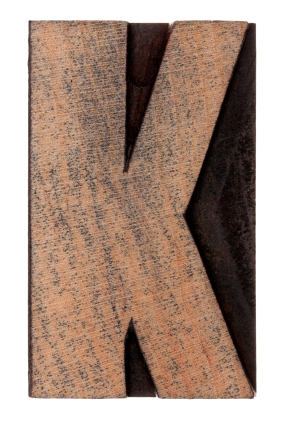
You can read about the history of abecedaria here.
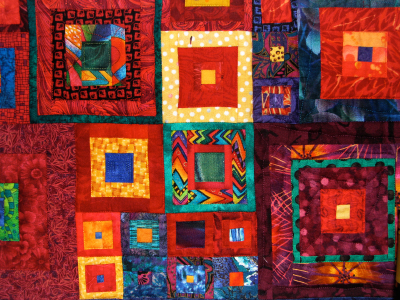
In my February workshop we’re exploring writing as quilting, and I’m thinking about my love for these smallest bits of meaning.
My blog posts this month will start with a letter for each day, the 29 days of February giving me plenty of leeway to make it through the Roman alphabet with three days to spare for distractions and glitches and letters that demand more time.
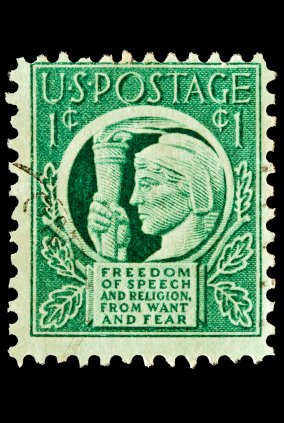
“In the future days, which we seek to make secure, we look forward to a world founded upon four essential human freedoms.
The first is freedom of speech and expression — everywhere in the world.
The second is freedom of every person to worship God in his own way — everywhere in the world.
The third is freedom from want — which, translated into world terms, means economic understandings which will secure to every nation a healthy peacetime life for its inhabitants — everywhere in the world.
The fourth is freedom from fear — which, translated into world terms, means a world-wide reduction of armaments to such a point and in such a thorough fashion that no nation will be in a position to commit an act of physical aggression against any neighbor– anywhere in the world.
That is no vision of a distant millennium. It is a definite basis for a kind of world attainable in our own time and generation. That kind of world is the very antithesis of the so-called new order of tyranny which the dictators seek to create with the crash of a bomb.
To that new order we oppose the greater conception — the moral order. A good society is able to face schemes of world domination and foreign revolutions alike without fear.
Since the beginning of our American history, we have been engaged in change — in a perpetual peaceful revolution — a revolution which goes on steadily, quietly adjusting itself to changing conditions — without the concentration camp or the quick-lime in the ditch. The world order which we seek is the cooperation of free countries, working together in a friendly, civilized society.
This nation has placed its destiny in the hands and heads and hearts of its millions of free men and women; and its faith in freedom under the guidance of God. Freedom means the supremacy of human rights everywhere. Our support goes to those who struggle to gain those rights or keep them. Our strength is our unity of purpose.
To that high concept there can be no end save victory.”
From Congressional Record, 1941, Vol. 87, Pt. I.
I am privileged to enjoy these Four Essential Human Freedoms.
But if I forget, or fail to use them, every day, with consciousness, with every breath and every creative act, then I may well lose them, and any chance I have of helping others to gain them, too.
“I am not a novelist, really not even a writer; I am a storyteller. One of my friends said about me that I think all sorrows can be borne if you put them into a story or tell a story about them, and perhaps this is not entirely untrue. To me, the explanation of life seems to be its melody, its pattern. And I feel in life such an infinite, truly inconceivable fantasy.”
Tonight, under the heading of “You teach best what you most need to learn,” in my writers group, we focused on description.
The “students” lingered over details. They savored taste, scent, sight, and sound. They surprised and delighted all of us.
Meanwhile, I found myself in such a hurry to tell that I had to break my own no-editing rule to add description to scenes just before it was my turn to read aloud.
But I’m a writer–it’s supposed to be about the words, isn’t it?
Not so fast.
I’m learning that pictures feed my words.
I’ve been trying to walk outside, think in images, capture my own, and let them guide, or even tell, my stories.
If you want to learn to take better pictures–pictures that feed you and your writing–check out this course by Bindu Wiles that starts on January 16.
Bindu is a wise, thoughtful, creative, and most important, fearless friend who shares not just her photographs but her photographic skills with her readers and students.
In another lifetime, my neighbor, a Classics graduate student who admired ancient Greeks and Coco Chanel, said, “I live for the deal.” (I have no memory of what deal she could possibly have been talking about. Maybe she was in the process of selling her Fiero.)
She lived for the game, she said, for the feint, the bob and weave, the art of negotiation, the subtle obfuscation of meaning on the way to getting what she wanted.
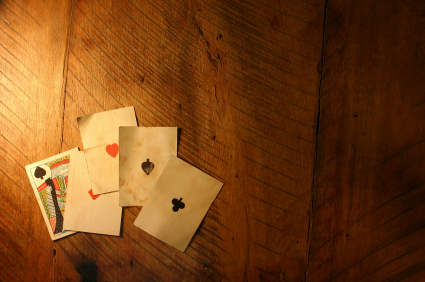
I can’t say that I’ve ever lived for the deal. I prefer to ask for what I want, and know what you want, and hope we can work things out with all our cards on the table.
In poker, a tell is a signal that one player gives, either deliberately (to mislead her opponents) or unwittingly–a facial tic or some other involuntary response–as to the quality of her hand of cards.
The player who can read her opponent’s tell, especially a tell that reveals her hand, has an advantage in the game.
The friend who can hear in my voice that I’m not “fine,” who can tell by the length of my sentences or my response time that something is up, is the friend who can read my tell, and we are both usually better for it.
The reader of my manuscript who can say, “this doesn’t ring true for me” or “that section really nailed it” is invaluable to me writer.
I don’t want to give or withhold tells and make you guess. I want to tell you (even if it is with a slight slant) and hope you’ll understand.